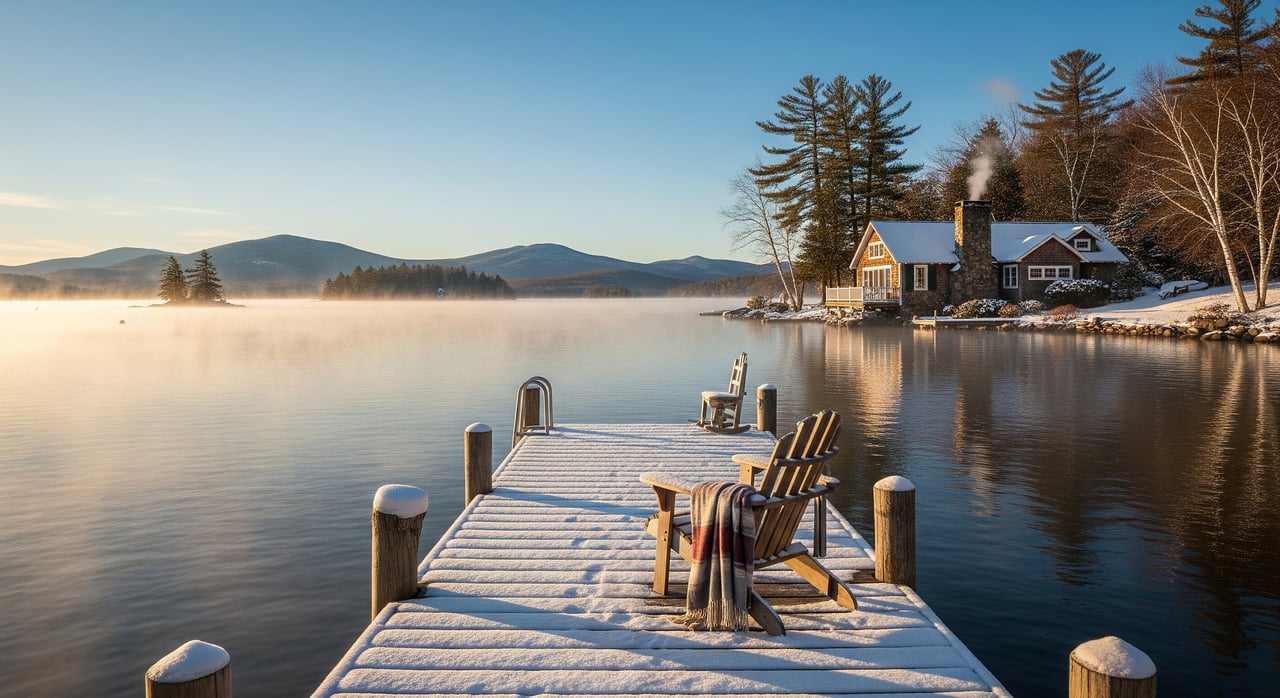
Is winter in Holderness quiet, cozy, or action packed? The truth is, it can be all three. If you are eyeing a home near Squam Lake, winter opens up a calm, scenic season with smart ways to get outside and just as many reasons to come back to a warm fire. In this guide, you will find nine winter-friendly activities, safety and logistics you should know, and practical home features that make cold-weather living easier. Let’s dive in.
9 winter ways to enjoy Squam Lake
1) Ice fishing on safe ice
Ice fishing is a classic way to experience Squam’s winter landscape. You will see pop-up shelters, tip-ups, and patient anglers chasing trout, bass, and perch. A freshwater fishing license is required for anyone 16 and older, and rules can change by species and season. For current licensing, season dates, and regulations, check the New Hampshire Fish and Game website.
What this means for buyers: You will want storage for gear like augers and shelters, plus easy winter parking or lake access. Many lakefront owners fish right from their shoreline when conditions allow.
2) Snowshoeing for simple adventure
Snowshoeing is low impact, great for families, and perfect for shoreline loops and forest trails. Trails at the Squam Lakes Natural Science Center are often accessible in winter and may include guided programs. Nearby conservation lands also offer quiet routes with big views.
What this means for buyers: Look for homes with mudrooms, boot storage, and a garage or shed for winter equipment. Proximity to trailheads adds daily convenience.
3) Cross-country and backcountry skiing
You can find groomed and ungroomed options within a short drive of Holderness. Local ski centers and municipal networks in the Lakes Region and Plymouth area offer groomed classic or skate trails when conditions allow. Forest roads and conserved parcels can make peaceful backcountry routes for classic touring.
What this means for buyers: If skiing is a priority, focus on properties with easy access to groomed networks and space to store skis and wax kits.
4) Ice skating on coves and ponds
Natural-ice skating is magical when conditions cooperate. Sheltered coves and small ponds usually freeze more evenly than large open water. Many families also rely on monitored municipal rinks when they are available. Always check local condition reports before you skate, and avoid unfamiliar ice.
What this means for buyers: Near-town homes can make quick skates easier, especially if you want access to maintained rinks or community spaces.
5) Winter wildlife watching
Winter is a great time for birding and tracking. Bald eagles and other raptors are often seen around the Lakes Region. Trails and programs at the Squam Lakes Natural Science Center are excellent for learning local habitats, and lake access points can be good for quiet viewing.
What this means for buyers: Seek properties near conserved shoreline or trail networks if wildlife and quiet walks are part of your winter vision.
6) Photography and scenic drives
Frozen sunrises, snow-frosted pines, and ice patterns make winter photography around Squam unforgettable. Shoreline roads provide vantage points, though some seasonal roads are narrow or not plowed. Plan your routes and carry a winter kit in the car.
What this means for buyers: Year-round road access matters. Ask about plowing, road class, and typical winter maintenance on the street your home is on.
7) Snowmobiling and winter trail riding
New Hampshire’s snowmobile trail network reaches across the region. Riding on the lake surface may be allowed when designated open by local authorities. You must follow state registration and safety rules. For registration details and seasonal guidance, start with the New Hampshire Department of Safety.
What this means for buyers: If riding is important, confirm proximity to groomed trailheads, trailer parking, and any association rules that affect lake access.
8) Cozy dining and cultural stops
After a cold day out, locals head to year-round inns, restaurants, bakeries, and community events in Holderness and nearby towns like Plymouth, Center Harbor, Meredith, and Sandwich. Winter hours can be reduced, so it helps to call ahead.
What this means for buyers: Consider how close you want to be to grocery stores, dining, and community spaces during the quieter season.
9) Community programs and seasonal rhythm
Winter in Holderness has a slower, social rhythm. Look for lectures, guided walks, and family events at the Squam Lakes Natural Science Center. You will also find town happenings and school events that add community touchpoints during the colder months.
What this means for buyers: Decide if you want a quiet, retreat-like experience or regular community engagement within a short drive.
Winter safety and logistics
Ice and lake safety
Ice thickness can vary widely from one cove to the next, and no ice is ever guaranteed safe. Many agencies publish general guidelines, but they are only starting points. Always check current advisories from New Hampshire Fish and Game and follow local guidance before stepping on ice. Go with a partner, carry ice picks and a throw rope, and avoid pressure ridges, inlets, and moving water.
Licenses and trail rules
- Fishing requires a valid state freshwater license for anglers 16 and older. Regulations, seasons, and species limits change year to year.
- Snowmobile use requires state registration and adherence to trail rules. Trails are maintained by clubs, and trespass rules apply on private land.
Check NH Fish and Game and the New Hampshire Department of Safety for current rules before you go.
Roads, parking, and winter access
Winter maintenance varies by road type. Town and state roads are generally reliable, while private or seasonal roads may require owners to arrange plowing or accept limited access. Parking near launches and trailheads is often limited in winter. For official notices, policies, and event calendars, use the Town of Holderness website.
Emergency services and home systems
Holderness has local emergency services, though long driveways, steep grades, or severe weather can slow response. Ask sellers about winter access for emergency vehicles. For home systems, confirm heating type and recent usage, fuel delivery options, insulation, and winterization steps for plumbing and septic. Internet and cell reliability can vary by location, so test coverage if you plan to work remotely.
How winter features shape home choices
Location and access trade-offs
- Lakefront vs near-lake: Lakefront gives instant views and convenient winter access for activities like ice fishing, when conditions allow. It can also mean higher maintenance and taxes. Near-lake homes often offer easier year-round road access at a lower cost.
- Road class matters: Year-round plowed roads are best for daily commuting and dependable winter visits. Private or seasonal roads can be scenic, but you may have to manage plowing and shared costs.
Maintenance and operating costs
- Snow management: Budget for driveway plowing, walkway sanding, and roof snow-load management. Steep, long drives can add cost and time.
- Heat and efficiency: Oil, propane, natural gas in limited areas, and wood are common. Ask for recent bills and look for upgrades like insulation, programmable thermostats, and backup heat sources.
- Storage: Mudrooms, lockers, and garage space make winter living smoother.
Lifestyle and community
- Proximity to trailheads, the Science Center, and the town center can shape how often you get out in winter.
- If you prefer a social winter, choose a location close to year-round dining and community venues.
Market and resale considerations
- Lake-access homes usually carry a premium and broad appeal in every season.
- Properties that show easy winter access, modern heating, and manageable maintenance often sell faster to year-round buyers.
Insurance, liability, and rules
- Review homeowners coverage for ice dams, frozen pipes, and liability for winter guests.
- If an association is involved, understand winter rules about dock storage, snowmobiling, and plowing of shared areas.
Quick buyer checklist
- Ask for typical winter utility bills and plowing invoices.
- Confirm who plows private roads and check driveway easements.
- Verify propane or fuel delivery timing and service providers.
- Locate the nearest grocery, pharmacy, and year-round services, plus their winter hours.
- Confirm emergency vehicle access in winter conditions.
- Inspect roof design for snow-load capacity and ask about past ice-dam issues.
- Verify lake access rights, association rules, and seasonal storage for docks or boats.
When you are ready to explore homes that match your winter lifestyle, reach out to Juli Kelley for local insight, concierge-level guidance, and a clear plan from first tour to closing.
FAQs
What should a newcomer know about Squam Lake ice safety?
- Always verify ice conditions with New Hampshire Fish and Game and local authorities before going out, and never assume uniform thickness across the lake.
Which winter activities are most beginner friendly near Holderness?
- Snowshoeing on accessible trails and guided walks at the Squam Lakes Natural Science Center are great first steps for families and casual adventurers.
Do I need special vehicle access for winter homes near Squam Lake?
- Many buyers prefer year-round, town-plowed roads; long or steep private drives can require regular plowing and sanding to stay accessible.
Where can I find up-to-date rules and event info in winter?
- Use New Hampshire Fish and Game for fishing rules, the Town of Holderness for local notices, and the Science Center for programs and trail updates.
What home features make winter living easier in Holderness?
- Look for efficient heating, good insulation, mudroom storage, a garage, and a driveway that is practical to plow and sand during storms.
How do I register a snowmobile for riding in New Hampshire?
- Registration and safety information are provided by the New Hampshire Department of Safety; check their site for current requirements before you ride.